WFMAD Day 29 – Slaying Demons of Doubt

I’ve heard from a number of you recently about the struggle to maintain your confidence during the writing process. Many (all?) of you are beset by doubts about your talent, your current project, the competition, the marketplace, your future, and pretty much everything related to being a writer.

So am I.

Frankly, it’s amazing any of us manage to get out of bed in the morning.

I think that being plagued by the Demons of Doubt is the hardest part of being a writer. (Please note – if you are writing, you are a writer. It doesn’t matter if you are published or not.)

So what are we supposed to do?
Ready… We’re just about at the end of the 2011 WFMAD Challenge. If you’re looking for a writing buddy to help you keep up your writing momentum until next year, post your email address and name in the Comments section. Get yourself a new, writing-only Hotmail or other address if you don’t want to publicize your real one.

Set… “It is worth mentioning, for future reference, that the creative power which bubbles so pleasantly in beginning a new book quiets down after a time, and one goes on more steadily. Doubts creep in. Then one becomes resigned. Determination not to give in, and the sense of an impending shape keep one at it more than anything.” Virginia Woolf

Today’s prompt: The Demons of Doubt will always sit on your shoulders. Sorry. It’s a law of writing physics.

You cannot banish them, but you can defang them.

Think about the best day writing you ever had; that perfect storm of creation during which you lost track of where you were and the passage of time – the best day when you lost yourself in the world of your novel. Write about that day in beautiful, loving detail.

That is your shield. You will wave this in the face of the demons when they rise up and try to infect you with their bile. To hell with them!

Stop thinking about the marketplace. It doesn’t matter how old or young you are. It doesn’t matter if you have an MFA or not. It certainly does not matter if you think what you are writing is any good yet. (You are a WRITER, for the love of Pete! That means you’ll be REVISING. A LOT!!! Stop wasting energy judging your work and then beating the crap out of yourself because it sucks. Instead, use that energy to lift up the shield you just wrote. Fasten onto the memory of your best writing day. Then summon another day like that and get to work.

Scribble… Scribble… Scribble…
WFMAD Day 27 – Go Bag

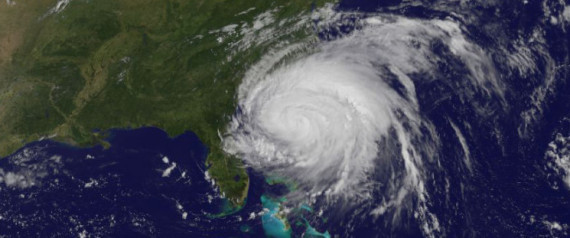
I think the most striking statistic about Hurricane Irene so far is CNN’s statement that the storm will affect 1 in 6 Americans. (I’m still trying to wrap my head around this.) We are far away from the danger; might get some wind and a little rain. We’re used to losing power frequently, so that’s not a problem. I sure hope those of you who are in Irene’s path stay safe, snug, and dry.

image credit Associated Press

In case your power is about to go out, let’s get busy right away with tonight’s Irene-inspired prompt.

Ready… Make sure that you pack a notebook (the kind made out of paper) and sharpened pencils in your go bag. Natural disasters provide all kinds of inspiration and you need your tools! (It’s easier to write in the rain with pencils than pens.)

Set… “To describe my mother would be to write about a hurricane in its perfect power.” Maya Angelou

Today’s prompt: Your character has five minutes to throw his most important possessions into a backpack, because the hurricane has changed course and he and his family must flee. What goes in the bag? Why? And what is hidden in that small wooden box that he pulls down from the top shelf of his closet when no one is looking? Be as detailed as possible. This is a chance to show character by the decisions he makes.

Scribble… Scribble… Scribble…

WFMAD Day 26 – Permission to write suckaously


Several of you asked me to address the universal discomfort of sucky early drafts.


Given the barn floor quality of my early drafts, I consider myself an expert in this area. “Queen of Awful Early Drafts,” that’s what you can inscribe on my crown.


Here’s the thing they probably don’t tell you in MFA school: writing a book that is good enough to be published will always take longer than you want it to. Much longer. As in, it could take years longer.


So what?


You haven’t bet the mortgage payment on being published in the next six months. The health of your children or partner doesn’t depend on how many words you wrote today. And no matter how hard you try, your writing will not change the path of Hurricane Irene.


One of the best things I ever did to help my career was to pay a visit to the Cornell University Library. There, in the third sub-basement, and after surrendering my driver’s license and kidneys to the gorgon guarding the door, I went into a hermetically sealed room, and pawed through the papers of E. B. White.


Guess what? He wrote some HORRIBLE pages in the early drafts of Charlotte’s Web. Stanky! He rewrote the opening chapter something like eight times!!!


I don’t know about you, but I don’t think that my writing talent and skills even come close to those of E. B. White. So if he needed time and space to write suckaously in order to find his path to his clear writing and brilliant storytelling, then I sure as hell have permission to muddle and muck around as much as I need.


You have permission to write sucky.


You do not have permission to submit sucky writing.


You have permission to write as many drafts as required to bust out of suckaiousness and into something that readers will enjoy.


You do not have permission to whine because the process takes longer than you want.


Ready… Make sure you have stored one gallon of water for each person in your house for the next seven days. Plus water for your pets. And realize that if the hurricane does mess up your life this weekend, there’s a chance that you might not be able to flush your toilet for a while. (Hurricanes give writers such good material to work with!!!)


Set… “Be obscure clearly.” E. B. White


Today’s prompt: Write yourself a permission note to write less than Newbery- or Pulitzer quality in early drafts. Be sure to note things like the fact that you are not a demi-god, and that demi-gods are crappy writers anyway, and if it were easy, you wouldn’t be challenged and you’d be trying to do something else, like composing duets for harpsichord and spoon. Heap it on. Shovel hard. Try to fill two pages in fifteen minutes.


Scribble… Scribble… Scribble…

WFMAD Day 25 – Dive in

(PSSSSST! BE SURE TO SCROLL TO THE BOTTOM OF TODAY”S POST! I HAVE TO ASK YOU SOMETHING!)

One of the differences (for me) between an early and a late draft is that as I revise, I trim or cut the opening chapters. I have a bad habit of frontloading too much information in early drafts. I see this when I do manuscript critiques, too. The author goes on a long-winded explanation of the culture of the world where the story is set, or they give every detail about the night the main character’s grandparents met, etc. These chapters have a great deal of “telling,” usually in the narrator’s omniscient voice, and not much in the way of “showing,” i.e. action or dialog.

If you are feeling a little guilty after reading the paragraph above, knock it off. This doesn’t mean you’re a bad writer. It means you’re still arm-wrestling an early draft.

But at some point, you need to take a deep breath, cut out all the fluff, and dive in to your story.

We shove all that background stuff into the front of the book where it doesn’t belong, because WE, that is, the author, are still figuring out the world of the story. The trick is once you’ve figured out all the background and the situations that led up to your opening dramatic scene, to cut out most or all of it. (The Latin for this is in media res.) You’ll find ways to subtly weave in the information as the story unfolds. If you absolutely, positively cannot bring yourself to cut out the four pages of chapter one in which you explain why all the characters have one foot, and the etiquette of how a left-foot person asks a right-foot person to dance, and the overthrow of the government that was the direct result of the covert importation of the first sneakers ever seen in this distant land, then I have news for you.

You might want to find a different opening scene, one that is so compelling, you don’t drown your reader in backstory.

Ready… Clear your throat. For real. You sound like you’re coming down with something. Do you want a lemon drop?

Set… “Finally, I try to work slow. I plod, double-check, and triple-check and then check a couple more times. If I go slow enough, I can hopefully craft something that the reader will fly through in a straight rush. That’s the goal, anyway.” Joe Hill

Today’s prompt: Write “Once upon a time,” and then complete the sentence. BUT! Make it an action-packed sentence. No background. No explanation. All showing, no telling. Make it the kind of sentence that will put your reader on the edge of his seat and beg you for the rest of the story. See if you can write at least fifteen of these sentences in the next fifteen minutes.

Scribble… Scribble… Scribble…

WAIT!! DON’T START WRITING YET! I HAVE A QUESTION!

Thank you.

The 4th Annual WFMAD Challenge is almost over. What would you like me to discuss in the days we have left? Any burning questions? Pet peeves? Ponderous problems? Tell me all about them and I’ll see what I can do to help.

OK. Now go do that scribble thing.

WFMAD Day 24 – Overcoming the pain

No earthquakes up here on the tundra today, so I’ll write yesterday’s original blog idea.

The idea came from my right knee. The right knee that started acting up at mile 13 during yesterday’s run, and forced me to stop many, many times to stretch. (Because it’s not really my knee that is the issue. My right ITB has a tendency to tighten up, which pulls the knee a bit out of alignment.)

Yesterday’s run was supposed to be my first attempt at 20 miles as I continue with my training for my first marathon this fall. I was nervous. My husband couldn’t come with me. I got started later than I wanted. But mostly I was nervous because what kind of idiot thinks they can run 20 miles? Or 26.2? That is insane.

The knee pain I was fighting seemed the best confirmation of my worst fears; that I’m not really a runner, that I’ll never be a runner, that I was born without the talent or the knees to run serious distances, that I’ve been deluding myself all year, that people are laughing about me behind my back, that I’m wasting my time, energy, and money, that I should be sensible and stick to 5Ks.

Sound familiar?

When you are pain, the whispers of doubt start to shout. It happens to everyone who is trying to express themselves creatively. The discomfort and confusion of trying to figure out a first draft leads you to doubt yourself, then get angry and criticize yourself, then come up with a bogus reason to procrastinate.

I did not quit yesterday. I slowed down, stretched a lot, walked a bit, and kept going. By mile 18, I started singing. Because I was going to make it. Not fast, not pretty, but who cares? I was running farther than I had ever run before. The sun was shining, birds singing, and I was joyous. I ran 21 miles yesterday. I did not let the fear and pain conquer me. They ran alongside me for a while, but I found the courage to wave good-bye to them and go off on my own path.

Ready… Take a minute to dream your secret dream of artistic or athletic triumph.

Set… “We gain strength, and courage, and confidence by each experience in which we really stop to look fear in the face… we must do that which we think we cannot.” Eleanor Roosevelt

Today’s prompt: Write about a moment when you or your main character had to face a fear.

Scribble… Scribble… Scribble…